
Photos: Contributed
Supporting the rise in micro-apartments and modular urban spaces through thoughtful design
As cities grow denser and land costs continue to rise, developers, architects and designers are increasingly exploring compact living solutions that make efficient use of limited space. Micro-apartments, modular housing and prefabricated residential units are emerging as practical responses to these pressures, offering small but highly functional living environments designed for modern urban lifestyles.
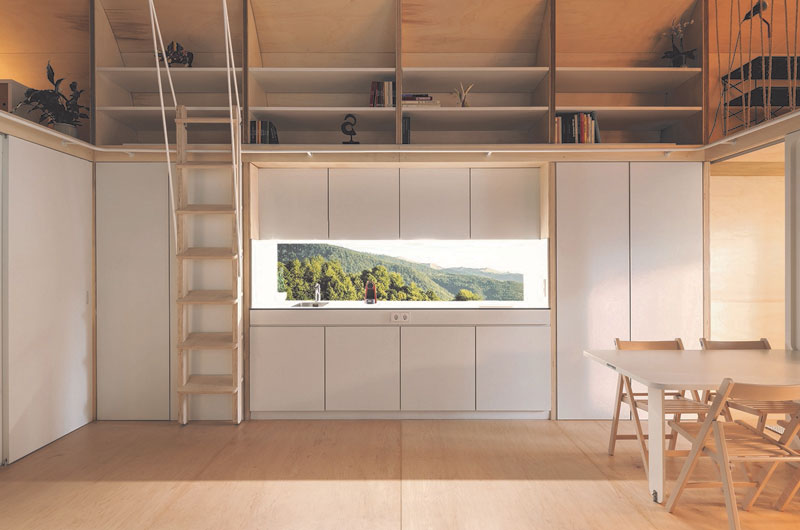
According to Canadian Architect, micro-apartments are typically defined as units under 400 sq. ft., though some urban developments push that figure even lower. In spaces of this scale, every element of the interior must serve multiple purposes; walls may integrate storage, partitions may double as furniture systems and surfaces must withstand frequent use in highly condensed environments. For industry professionals, these parameters mean the building products they choose must perform reliably while allowing for precise machining and customization.
Material selection becomes even more critical when these housing concepts intersect with the growing use of modular construction. Many compact housing developments are now manufactured off-site, where units are produced in factory settings before being transported and assembled on location.
This approach offers clear advantages: tighter quality control, reduced construction waste, and significantly faster project timelines. However, it also places new demands on building materials. Panels and components must maintain consistent thickness, machine cleanly, and perform reliably within automated or semi-automated production environments. Beyond efficiency, sustainability is also becoming a key driver in material selection. Engineered plywood, particularly when sourced from responsibly managed plantation forests, offers a renewable, lower-carbon alternative to more resource-intensive materials.
For fabricators working with CNC equipment and panel processing systems, dimensional consistency is essential. Variations in thickness or core stability can slow production, increase tool wear, or create alignment issues during installation. Materials that offer predictable performance across large production runs help ensure that cabinetry systems, wall panels, and integrated furniture components fit precisely within compact interior layouts.
Weight is another important factor, particularly in modular housing systems. Because prefabricated units must often be transported from factory to site, lighter materials can simplify logistics and reduce structural load requirements.
It is essential that compact residential developments also comply with the same regulatory frameworks that govern larger multi-family housing projects. Fire safety, structural performance, and material durability remain key considerations, particularly as building codes evolve to address higher density living environments.
All of these considerations have contributed to renewed interest in engineered plywood, which combines strength with a relatively low weight compared with many composite substrates. Advances in engineered wood technology are also helping expand the range of plywood applications in these settings. Fire-retardant plywood products, for example, are designed to meet recognized fire-performance standards while retaining the fabrication flexibility that millworkers require.
Products such as Garnica’s Fireshield illustrate how these technologies are evolving. Designed for demanding architectural applications, the panels undergo a treatment process that preserves fire-retardant properties after machining, making it a unique solution in the category of treated plywood. The panels are engineered for interior applications, slowing carbonization, resisting flame spread and meeting top certifications, including ASTM E-84 Class A and CAN/ULC S102-10. For designers working in compact housing environments, this type of performance can help integrate fire-rated materials into cabinetry systems, wall panels, and architectural elements without sacrificing design intent or machining flexibility.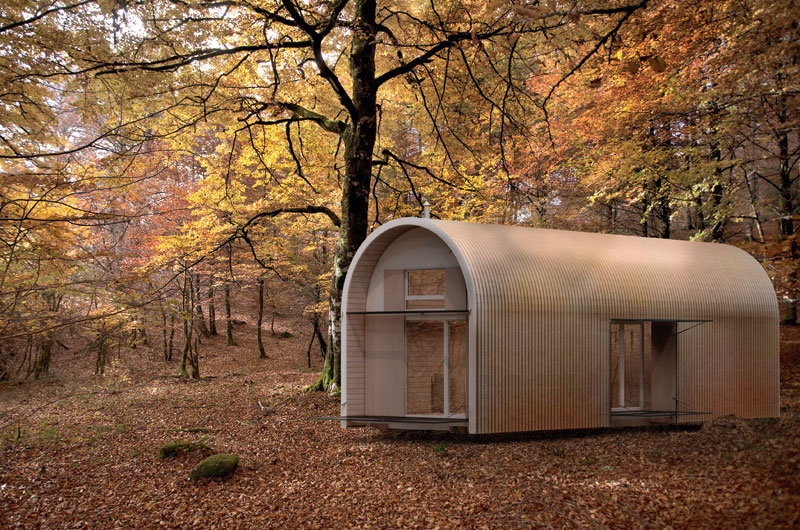
Designing small spaces that feel larger
Beyond performance considerations, the success of micro-apartments depends heavily on interior atmosphere. Spaces that are physically small must still feel comfortable and welcoming to residents. Material choices therefore also play a critical role in shaping the visual character of compact interiors.
Wood surfaces are frequently used in these environments because they introduce warmth and texture that can offset the density of urban living. Decorative plywood surfaces allow designers to incorporate natural materials into cabinetry, partitions, and even built-in furniture. Garnica’s Elegance range, which features high-quality decorative veneers over a premium poplar core, provides designers with options for integrating various wood finishes throughout compact interiors. Because plywood panels can serve both structural and decorative functions, they allow architects to simplify interior systems while maintaining a cohesive design and layout. For example, cabinetry panels can serve simultaneously as structural components, storage solutions and decorative surfaces, streamlining both design and fabrication while maintaining a cohesive aesthetic.
A material aligned with urban housing trends
As housing models continue to evolve, compact living solutions are likely to play an increasingly prominent role. Micro-apartments, modular systems, and prefabricated units offer practical ways to address rising housing demand while enabling developers to build more efficiently in dense environments.
For the woodworking and construction industries, these shifts highlight the importance of building solutions that combine precision manufacturing characteristics with architectural versatility. In this context, plywood is being considered not only for structural purposes, but also as a multifunctional building material capable of contributing to both fabrication efficiency and interior design quality.
Modular construction and compact housing continue to grow in popularity, and lightweight engineered wood panels are becoming an increasingly important part of the toolkit used to build the next generation of urban living spaces.